Home Moving Blog How to Pack Pictures and Mirrors for Moving

How to Pack Pictures and Mirrors for Moving

Wednesday, November 20, 2019
Your home decor reflects your personality.
There’s no place like home.

It’s the tiny things that turn into a house to a house — charming details such as home plants and artistic illumination, private touches such as decorations and images around the walls, etc..

There is very little doubt that you, also, have spent a great deal of time, thought, and cash on your interior décor to accomplish that feeling of warmth and coziness which transforms a traditional home or apartment to your sweet house.

Should you have to move home, however, things become somewhat complicated — you may most certainly wish to take your décor on you, so which you could create your new place feel like home. Transferring such fragile, oddly-shaped, tremendously precious, or exceptionally delicate things though is a significant obstacle — it’s extremely tricky to keep them safe and sound throughout the tough movement procedure.

This is particularly true for glass and artwork things — paintings, images, and mirrors specifically – brittle glass may shatter, elaborate frames may crack and chip, and nice canvas or paper can tear and tear. To ensure that these delicate possessions of yours will probably arrive in your new house intact and unscathed, you have to supply them with maximum security when packaging them to the transfer.

This job is better left to the specialists — professional movers and packers who possess the technical packaging materials, rich expertise, and specialized know-how to package framed images, canvas paintings, big mirrors, and some other precious wall décor you might have at the safest manner possible.

If, for one reason or another, you would like to pack by yourself, but you have to be prepared for good challenges: The best way to package picture frames for transport? The best way to package paintings to get a move? The best way to package a mirror safely?

You can find all of the answers you need in the Detailed guide to choosing mirrors and pictures for transferring under:

What Materials Can You Want to Pack Photographs and Mirrors for Shipping

To have the ability to guarantee the protection of your paintings, photographs, and mirrors if transferring them to a new residence, you want to have adequate packing materials which will supply them with efficient security at each phase of the relocation procedure. You are likely to want:
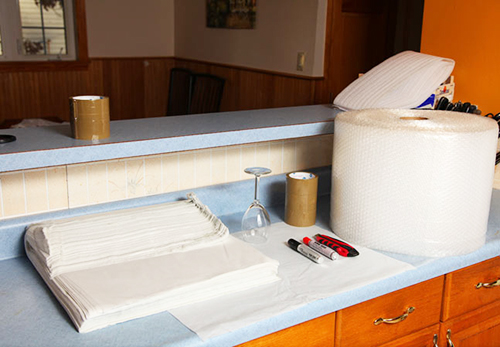
You need quality packing materials when packing pictures for moving.
Quality packaging materials make all of the difference.
  • Strong cardboard boxes of decent sizes (or technical image boxes for transferring );
  • Cylindrical cardboard protections (in case you’ve canvas images without frames);
  • sterile cardboard bits;
  • Soft packaging paper;
  • Lots of bubble wrap;
  • Cardboard (or polyurethane ) corner guards;
  • premium excellent packaging tape and painter’s tape;
  • A couple shifting blankets;
  • A permanent markers.

Great to recall:

1) it is easy to find older moving boxes at no cost or substitute expert wrap materials with common household products, thus saving a little cash on packaging supplies. Tempting as it might be however, you are strongly advised to avoid doing this and invest in brand new top excellent packaging stuff for your framed artwork and glass things (and for any other delicate or precious possessions of yours). These posts are normally quite delicate, quite pricey, and imbued with high sentimental value, which means you will certainly need to maintain them intact and unscathed through the move. Aged boxes and makeshift packaging materials, but will not supply your precious possessions with great adequate security, which means you risk having them damaged during the transport. Fixing or replacing your destroyed things will cost you a whole lot more than purchasing proper packing supplies, and of course that you might lose irreplaceable items.

Two ) Picture boxes (also referred to as mirror boxes or artwork boxes) are the very best choice for ensuring that the protection of framed art and mirrors (especially larger ones) throughout a transfer. They are stronger, flatter, and bigger than normal transferring boxes and are composed of four distinct pieces of cardboard which interlock with each other to make an extremely customizable protective case, giving you the capability to adjust the dimensions of the last piece snugly on your framed post.

Where to purchase picture boxes for transferring? You are able to come across the specialty boxes in any moving supply shop or truck leasing service, in addition to at office supply stores and home improvement stores.

If you can not find technical image boxes, however, you can create customizable cartons yourself: break apart several regular moving cartons, flatten them, and match them round the frames of your paintings, photographs, and mirrors.

3) The box you are going to package framed art inside must be larger than the image itself — its decreased size should be approximately 30% bigger than its designated framework (the bubble wrap and other wrapping materials will require a little excess distance and you’ll still require enough space for cushioning materials).
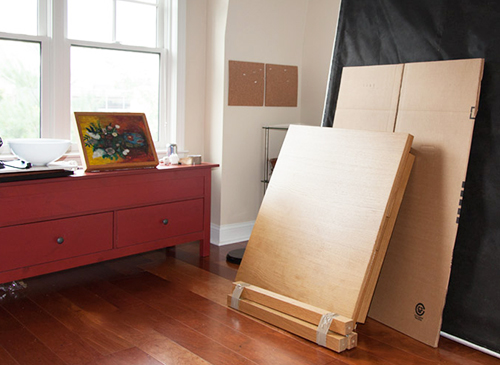
Picture boxes for moving are your best bet for ensuring the safety of framed art during a relocation.
How can you possibly pack artwork in a box?

If a mirror or painting is too big and will not fit into any easily available packaging boxes, then you are likely to require a telescopic box – all these are really two boxes which fit inside one another, so that they can accommodate quite tall, very long, or very broad products.

4) Sturdy, medium-sized transferring boxes will do if it comes to packaging smaller frames and pictures.

When you have all of the essential packaging materials, you can return to work.

Bonus suggestion: Your photos must be one of the very first things to package for transferring — you won’t really”want” them before moving day and it is ideal to pack your fragile art as you still have loads of energy and time left, so which it is possible to finish the task with extreme attention and care. (See also: Things to pack when for transferring )
How to Pack Pictures and Mirrors for Moving

Thus, what’s the perfect method to package images for moving? To guarantee optimum protection to your own paintings and photographs, you have to wrap them into protective stuff first, then set them in sturdy boxes of proper sizes, provide adequate cushioning, and tightly seal the cartons.

Measure 1. How to Wrap Pictures for Moving

To Maintain a mirror or a painting That’s in a framework and under glass protected throughout the move, you are advised to:

  1. Clear a desk or a different flat, secure surface that’s large enough to match even the greatest framed mirror or picture you’ve got for packaging. Throw down a thick blanket for extra protection through the wrap procedure;
  2. set a large piece of soft packaging paper within the blanket. If you are going to package a huge mirror or a huge image and frame, then lay out a few sheets of newspaper in this manner that their ends float to produce a newspaper place that’s double the size of this framework;
  3. Carry your mirror or painting off the wall, put it onto a soft surface (such as a bed or a sofa ), tilt it towards you, and lightly brush the surfaces using a soft paint brush to remove any dirt and dust out of the thing (be certain that you brush consistently in precisely the exact same way );
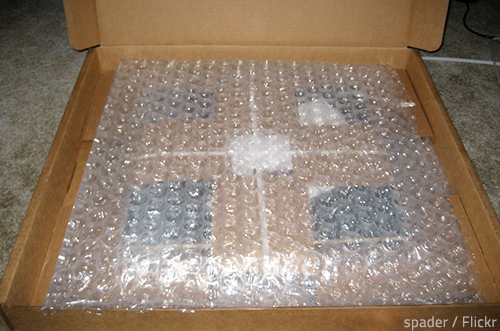
  4. Safe the glass together with painter’s tape (masking tape) to protect the painting and also keep the glass in place if it cracks or breaks throughout transit – broken glass is the most probable damage that your framed artwork can sustain through a house move, but it is also the easiest to fix, provided that the canvas is undamaged. Thus, create a giant X throughout the glass surface or make a square grid pattern onto the glass together with painter’s tape (it will likely be a lot easier to eliminate than regular packaging tape and will not leave any sticky residue on the surface). Even if the glass cracks, then It Is Going to be held in position and will not hurt the canvas;

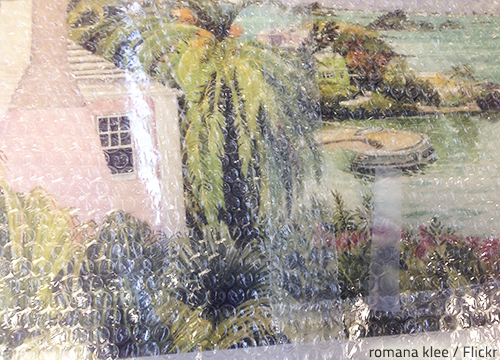
    Packing pictures with bubble wrap is a good way to keep them safe during a house move.
    What do you see through the bubble wrap? A fantasy? A memory?

  5. Put a sheet of cardboard onto the glass front for extra security — it will offer stability and help reduce static cling that can develop between the bubble wrap along with also the glass;
  6. Lay the framed mirror or picture (glass side down) directly in the center of the newspaper sheet(s) you have spread across your packaging region;
  7. Wrap the ends of the newspaper round the framework. Utilize a few additional sheets if needed to completely cover the whole framework;
  8. tape round the borders of this wrapped frame with packaging tape to ensure the paper;
  9. Utilize cardboard corner guards or particular Styrofoam wedges made to fit over the corners of this framework to give extra padding and equilibrium;
  10. Wrap the whole piece in a thick layer of bubble wrap;
  11. Run packaging tape round the wrapped post – all of the way round the framework, both lengthwise and widthwise — to maintain the bubble wrap set up;
  12. Mark the glass side to create unpacking safer and simpler.

Appropriate wrapping is of utmost importance when packaging framed images for transferring. When packaging canvas paintings without a frames however, matters are quite distinct – you can’t”wrap” the canvas because it is, You Have to roll up it:

  • Lay out a sheet of acid-free paper or a piece of unpainted canvas using a nice weave onto a level surface;
  • Lay your canvas painting down flat against the newspaper (or blank canvas) together with the painted side down;
  • Roll the paper and canvas up together, beginning on one of those short sides. Ensure that you roll up the canvas using the painted coating on the exterior and roll it somewhat loosely;
  • twist the rolled-up canvas to a solid cardboard tube with a diameter slightly larger than the diameter of your canvas roll (this can help keep the roster loose and will let it breathe).

Great to recall:

  1. Make certain that your hands are clean when handling mirrors and pictures. If your canvas paintings don’t have any frames and glass covers, then it is even recommendable to wear cotton gloves because the oils and substances on your skin may create smudges and destroy the canvases;
  2. Always carry substantial framed pictures and mirrors using 2 hands by their sides, as opposed to from the top or underside. In this manner, the burden of this item will be equally distrusted over its whole surface that will reduce the risk of an Whole side of the framework coming loose;

    Your pictures will be well protected in properly padded moving boxes of appropriate sizes.
    Up to Now, so great. It ’s time to move your images in moving boxes.

  3. Although packaging pictures with bubble wrap helps guarantee their security in a move, it simply works for packaging glass images. You shouldn’t ever wrapping a painting in bubble wrap unless it’s under glass — otherwise, the bubble wrap can imprint itself on the paint and then destroy the image.

RELATED: The best way to package delicate items for transport

Measure 2. How to Box Pictures for Moving

As Soon as You’ve wrapped your images and mirrors for transferring, it is time to box up them to the trip to a new house:

1) Prepare the box:

  • If you are using a specialty box, slip a couple of the box pieces to a single other and pay their combined corners and sides with a thick layer of bubble wrap. Do exactly the same with the other two bits of this picture/mirror box – you ought to possess two interconnected half bits from the mirror packaging box which may be readily telescoped into one another;
  • In case you are using a normal moving box, then put it out, and tape up one of those open ends closed with heavy packaging tape – tape it nicely so the box will not open up when transferred. You’ll have produced a sort of”cardboard sleeve” that may fit your wrapped mirror or picture. Place some wadded-up packaging paper on the floor.

2) Place the wrapped up framed mirror or picture to the box:

  • Put it at the already cushioned initial section of the image box and then adjust the sides so that they fit snugly round the framework. Insert some wadded paper or bubble wrap across the edges and sides to guarantee adequate cushioning and block the mirror or picture from shifting during transport. After that, put the next section of this specialty box within the framework and fix it to match nicely. Press firmly (but carefully) both box components together, so that the packed framework will not have some room to move around. Run packaging tape in full circles round the image box to make certain that both individual segments are stored together at all times; or
  • Twist the image within the padded cardboard sleeve and then tape up the open ends (seal the box closely, so that it can not open during transport ).

When there’s sufficient space, you are able to package more than just one framed image, photograph, painting, or mirror within one box — just be certain that the frames can not come in touch with each other or transfer within the carton. It’s a great idea to use cardboard dividers between individual frames.

3) Examine the box — lift it attentively and shake it slightly to determine if the post (s) indoors can proceed:

Your framed art will survive the move intact and unscathed when properly packed.
Snug and secure
  • If something appears to be shifting, start the box and then include more cushioning substances – the item(s) from the box has to be entirely trapped;
  • If nothing else is changing indoors, utilize a bit more tape to seal up all the borders and fasten the bundle.

4) Label the box – utilize your black or red marker to label the box with its contents and destination room and compose ART, GLASS, FRAGILE, HANDLE WITH CARE, DO NOT LAY FLAT (or some other handling instructions which you find essential ) with large bold letters on at least three of its sides.

Here is the very best method to package a mirror or framed image for transport. To ensure that your delicate item will endure the transfer intact and unscathed, but you want to make sure its security during transport too.

The best way to Transfer Picture and Mirrors Safely

Appropriate packing will offer exceptional protection for your paintings, photographs, and mirrors throughout a house move. Yet, now that you understand how to package frames and pictures for transferring, you want to also understand how to transfer them the ideal way — without appropriate precautions, your art is easily ruined during the excursion in the back of a moving truck, particularly during abrupt and violent moves (like when creating a sharp turn or slamming on the brakes). Therefore, You Have to package your images and mirrors at the moving van in this way They Don’t go around or topple over even through an effect:

  • Pack images and mirrors at a location where they wont fall over – a secure place with an advantage of the vehicle;
  • Position your packed paintings and paintings vertically (in their borders, not lying horizontal ). This will enable pressure to disperse evenly in their whole surface and protect against breakage. In any case, if your graphics or mirrors are lying horizontal, other things may topple on them and hurt them;
  • Pack your images in a stand formation, with blankets and cushions positioned between different pieces. In this manner, the delicate items will be well protected even if the vehicles comes to a sudden halt;
  • Wedge your images and mirrors between significant items which are well fastened in place and will not move around — that will avoid the boxes containing your art from falling horizontally through the transport;
  • Ensure no heavy things can liquefy or slip into your images during transit;
  • If you are moving long distance at the summer or winter, ask that your delicate paintings have been hauled into a climate-controlled moving truck – your images are going to be on the street for many days and might be irreversibly damaged if subjected to extreme temperatures for this very long time.
Opening the moving boxes at your new home to find your pictures and mirrors safe is quite rewarding.
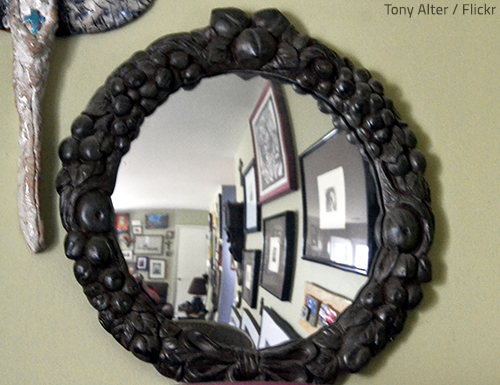
You can already see your sweet fresh house to the mirror? Fantastic job!

Great to recall: it is a fantastic idea to buy additional moving insurance to the delicate and most precious things — such as expensive, classic, or sentimentally valuable paintings and paintings.

This might not be the simplest way to package images (you can just wrap your framed paintings and photographs in bubble wrap and then pile them onto their borders within a big moving box, naturally ), but it’s the safest one – in the event that you do a fantastic job, your framed artwork is going to be as protected as though professionally packaged .

Remember, however, that movers will not cause damage to items that you have packed yourself. Consequently, when you’ve exceptionally valuable art, you might wish to think about getting your movers pack those specific pieces — the experts will supply your cherished possessions with the finest possible protection (they could even construct wooden crates around your art for supreme safety ) and will take liability in the event of an crash. This is particularly important when you are moving long distance or in case you’ve got classic or quite expensive paintings or mirrors to relocate.

Packing images, paintings and mirrors can be a risky undertaking which needs skill and expertise. Hiring professional movers and packers to look after your fragile art will help save you a lot of time, effort, and frustrations and will guarantee your peace of mind. Thus, before you put your head on packaging by yourself, be certain you get many loose, no-obligation quotes from top rated moving companies to discover how far their packaging services will cost you and determine whether it is worthwhile.

Have a smooth and safe movement!

Go back
Share:

Get a Free Moving Quote

  • 1
  • 2
  • 3
  • 4

What size is your move?

  • 1
  • 2
  • 3
  • 4

Moving date

  • 1
  • 2
  • 3
  • 4

Personal Details

  • 1
  • 2
  • 3
  • 4
Thank you.
Your message has been sent.
We’ll contact you soon.