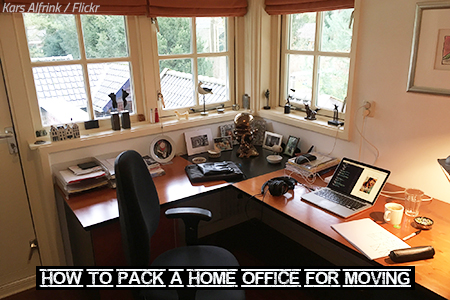
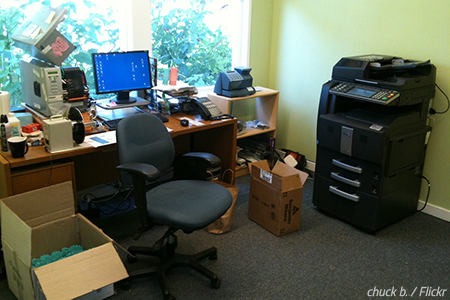
The top 3 candidates for the decoration Most Tough Room to Pack would be the garage, the kitchen and… your home office. Your home office? Really?
Yes.
First of all, your home office will include quite important documents which you just can’t afford to drop. Additionally, there are books available in virtually any home office space, and novels can be particularly heavy when packed into boxes.
Second, your home office may also have expensive electronics — computers, monitors, printers, scanners, copiers, desktop telephones, Wi-Fi routers, etc.. Thus, how should you pack all of those parts of office equipment to endure the move without harm?
And thirdly, you need to definitely not underestimate the practice of packaging and moving your workplace furniture — desks, chairs, bookcases, file cabinets, drawers, etc. Are you going to be able to package your office furniture on your own?
Read the house office packaging tips below to get a crystal clear idea about what is necessary to package your house office properly and economically.
Get the Ideal Kind of packaging supplies
Packing a house office can be somewhat tricky because of all of the important and costly things found inside. To have the ability to supply the essential protection for your sensitive files, office equipment, and office furniture, then you are likely to have to prepare the ideal packing materials well beforehand.
Here’s a listing of the House office packaging supplies you will need:
Strong cardboard boxes
1 thing is clear — you can not pack up your home office without the ease of sturdy cardboard boxes of different sizes. The fantastic news here is that you don’t need to use just fresh boxes bought from an office supply store or by a local moving company.
If you have got any time to spare, then it is ideal for your budget to get moving boxes at no cost — either by asking friends, coworkers, and acquaintances to get any cardboard boxes that they do not need, or simply by checking with local companies for any remaining cardboard boxes.
When packaging your home office gear, you need to use the original packaging boxes that the electronics came in since they provide the greatest possible security on the street. Hopefully, you are going to keep those first packing somewhere, maybe piled within your storage space. If you do not, then you will only need to come across powerful boxes of comparable dimensions and utilize a great deal more protective packaging stuff than you would when using the first boxes.
Where to Find free moving boxes: Total checklist
Packing paper
Packing up your home office effectively will require lots of packing paper too. You are going to want soft, clean, white and ink-free newsprint to safeguard all of the delicate items in your home office like the bits of electronics. Never use papers to package up the things in your office since the ink can move to a number of the more delicate surfaces and destroy your precious things indefinitely.
A bunch of 200 sheets of packing paper costs around $10 and can be purchased on the internet or in an office supply shop.
Packing supplies for transferring you can’t perform without
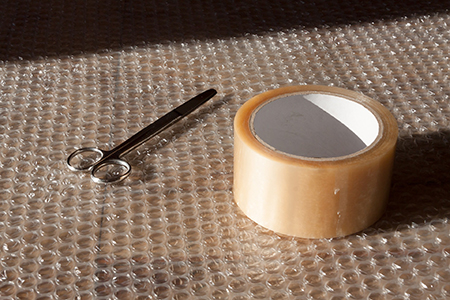
Bubble wrap
Bubble wrap will be quite helpful when you’re unpacking the furniture and electronics at your home office.
Bubble wrap gives the ideal security for all fragile items within your house office — from delicate parts of residence office furniture (glass panels, glass doors, etc.) to the readily breakable electronics within the workplace. The air-filled bubbles function as soft cushions to protect those delicate things from the risks on the street.
1 massive pack of bubble wrap – little bubble size (150 ft ) or big bubble size (100 ft ) – prices around $20 and should be sufficient for packaging a house office.
The best way to use bubble wrap for packaging
Packing tape and mark for tagging
Do not simply purchase the least expensive packaging tape you’ll be able to find — rather, pay a couple added bucks to find several rolls of high quality packaging tape that will do a fantastic job of repairing all of protective materials and procuring your moving boxes.
If it has to do with markers, you’re probably going to have a couple of decent ones lying around at your house office someplace. Provided that a marker is fantastic for tagging your boxes, then it is good enough to be utilized for your home office packaging job.
The best way to label boxes for transferring: The Very Best box tagging system
The best way to package home office paperwork and documents
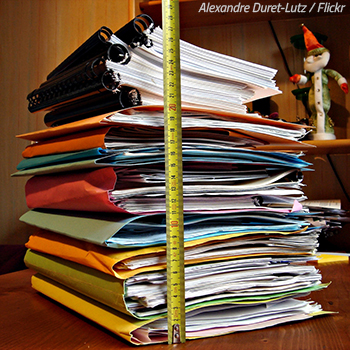
Every home office includes tons of significant files, so this is exactly what you ought to do next – arrange and package your house office files.
Stick to the following Five steps for packaging up your paperwork before your transfer:
Measure 1. Sort through your files
According to a few of those basic rules when packing for a movement , there is no use in packaging and moving things which you will just wind up throwing off after the transfer is finished.
To avoid doing things which produce no sense, step one to transferring your home office would be to undergo your gathered documentation and type it out in 3 distinct classes: PACK, SHRED, and RECYCLE.
Measure 2. Discard no more desired documents
You’re probably going to find many obsolete and unnecessary records while sorting through your paperwork — don’t squander time packaging and transferring people. The remedy is simple enough: SHRED all unnecessary files which contain confidential advice and RECYCLE the remainder of the useless documentation.
Measure 3. Pack the remaining files
As soon as you’re left without a significant documents that you merely need to take with you, the following step would be to arrange them with a system which is suitable for you. Then, set those vital files in different (accordion) folders and then package them in document boxes.
It’s possible to use common copy paper boxes to package your house office instruction in case you don’t possess some technical document boxes.
Measure 4. Tag correctly your document boxes
Type out your workplace files before packaging them.
When you have packed a box with essential documents, tape the lid closed and tag it appropriately using a concise description of its contents. Additionally, write down HOME OFFICE on these boxes so that you’ll understand where to shoot them right after you go into the new residence.
Measure 5. Transfer Your House office files on your own
If you have hired a moving company that will assist you move your possessions, then remember that the vital documents, including private ones, if stay with you constantly.
Move the house office instruction in your vehicle only because it is too insecure to hand over any sensitive info for your movers, even if those professionals look trustworthy and dependable.
What significant documents to consider when moving
The best way to package novels when moving your house office
There is a fantastic probability that your house office will have a fantastic number of books that you want to move into the new house office at the destination residence. However, before you’re able to transfer those books, you are going to need to package them securely to the road ahead.
Follow these simple 5 steps to packing your house office publications safely and quickly:
Measure 1. Optimize the Amount of your publications
Go through your book collection to find out whether there are any publications you do not need to package and move in any way. Some novels become obsolete with time so that it’s almost always a fantastic idea to examine what you need and discard the ones that you won’t ever want again.
Do so with all of the books in your house, not just the ones in your home office. Be sensible – you do not wish to pay cash to transfer items which you don’t care about anymore.
Measure 2. Ready the book packaging boxes
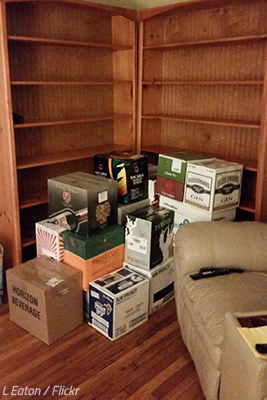
1 thing to bear in mind when packing novels is that they can grow to be too heavy too fast. Do not be tricked by the weightlessness of one page. Rather, prepare little to medium-sized packing boxes and inspect them for any signs of damage.
To make things safer, tape the bottom of every box you intend on using for packaging books to avoid accidental breakage of the containers on account of the substantial weight.
Last, put a few sheets of packing paper onto the inner bottom of every box as additional protection to your novels.
Measure 3. Organize the novels in the boxes
Start moving your home office publications to the boxes you have just ready. Based on the dimensions and thickness of these novels, you Can Opt to package them up in 3 different ways:
Organize the books horizontal and pile them closely across the box sides;
Organize your books vertical so that their receptive parts are confronting the box sides;
Ranking the novels so that their receptive elements are confronting you. NEVER package your novels using their spines facing you — if you do, you risk receiving their bindings damaged through transit.
You’ve just completed packaging your home office publications. It ’s bookcase time!
Should you chance to have very precious books, be sure to wrap every copy in white packaging paper.
Measure 4. Observe simple security steps
Bear in mind that novels are heavier than they seem, so you ought to attempt and maintain each book box under 50 pounds to keep things secure on the afternoon of the transfer. As stated previously, it’s also advisable to tape the base of every box as an excess security measure.
Here is 1 bit of home office packaging tips which may be immensely helpful for you: should you’ve got a rolling bag in your house, think about filling this up with the funniest novels you have.
Measure 5. Label the publication boxes
Do not forget to label your boxes for easier identification following the transfer. Use a marker pen and write BOOKS, subsequently HOME OFFICE — this manner, all those book-filled boxes may reappear, as though by magic, at the home office at the new home.
The best way to package books for transferring
How to package your office equipment (electronics)
Obviously, our hints for packaging your home office may also incorporate some helpful information on the way to package electronics for transferring — after all, your workplace ought to be packed with electronics of all sort: notebooks, desktop computers, monitors, printers, and copiers, desktop telephones and so forth.
All electronics are costly — a few over others, clearly, which means that your priority is to be certain all of these are well-protected for your relocation travel.
Measure 1. Maintain all wires and wires organized
There will be of wires and wires going in and out of every electronic device, so there’ll be so many cords to manage when packaging your home office to get a transfer. There are basically 3 things you need to do in order in order to prevent headaches when attempting to find out which cable goes where following the transfer.
Take photographs of how each unit is wired up — one photograph can help save you precious post-move time if you will need to hook up your electronic equipment once again.
Use stickers, coloured tape or trademarks to differentiate between the respective wires and also write notes on these decals every time necessary — for instance,”R” for right,”L” for left, etc.
Use zip ties to bundle together similar wires for better organization and easier identification following the transfer. Pack all wires together with their various devices.
Measure 2. Get the Ideal Kind of boxes
As stated before, you should utilize, whenever possible, the first boxes to your electronic equipment. The main reason is simple to guess — a first box delivers the best protection for your device it has been custom-made to safeguard through transportation. Consequently, if you maintain all or most first electronic equipment packaging, then that is great news.
If you do not, then do not worry — it’s still possible to make it work by discovering thick-walled cardboard boxes of comparable dimensions and using generous cushioning of packaging paper and bubble wrap.
Measure 3. Back up all important information
Anything can happen during a house move so that you have to protect all super significant electronics documents in the event of some kind of transport damage to your personal computer, for instance.
Guarantee a reassurance by backing up all of crucial computer files into a portable flash drive or an external hard disk drive. To make things much safer, think about using an internet backup service like google Drive, Dropbox or even Microsoft Azure to replicate your most critical electronic data.
Measure 4. Use lots of cushioning when packaging home office electronic equipment
Unless you have managed to come across the original boxes of these electronics at work, you are likely to need to use a fantastic number of padding materials to secure your expensive home office things within the non-original cardboard boxes.
Packing your home office gear is easier when you understand what to do.
Put pieces of bubble wrap around the bottom of every cardboard box — that first layer will function as a shock absorber.
Position cardboard cut-outs over track displays or other quite sensitive portions of your office equipment.
Wrap every digital device in soft packaging paper, then use sheets of (anti-static) bubble wrap as the last layer. Use small pieces of packing tape to keep everything tight. Don’t enable bubble wrap touch pc displays straight.
Utilize your well-padded notebook bag to transfer your notebook computer securely to the new residence. Do not forget to package the AC adapter too.
Measure 5. Label all house office gear boxes
Again, tagging your boxes correctly will save you precious time following the play, so just get it done.
The best way to package a pc for transferring
The best way to package office furniture when going
The most effective method to package up and move your office area would be to look after the furniture pieces within it also.
Our office moving checklist finishes with a few advice packaging house office furniture – the previous step to transferring your home office — last but definitely not least concerning importance.
Measure 1. Decision time: move your office furniture or maybe not?
Before you dash to package your office furniture to get a go, ask yourself whether it is reasonable beneath your particular conditions. Most furniture pieces are somewhat heavy and their transport to a new house will cost you a whole lot, particularly if this new home is situated a ways from your present site.
Occasionally the more budget-friendly strategy is to leave the old furniture bits behind (or sell it) and buy new ones following the transfer is finished. You might not enjoy your workplace furniture so much that you are ready to pay decent money to transfer it across the nation?
If you don’t possess a bit infused with sentimental value or a costly antique furniture piece made from solid timber, most furniture won’t be worth going, even more so as it’s of the IKEA kind.
Furniture movers: Furniture moving made simple
Measure 2. Disassemble your workplace furniture
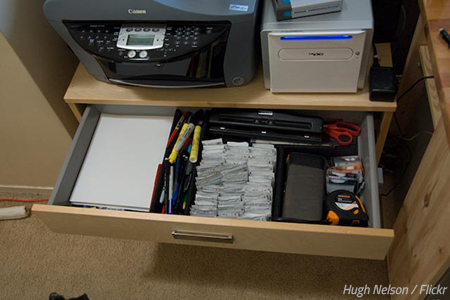
Stretch-wrap drawers, nevertheless filled with miscellaneous office products, to save valuable time.
Measure 2 of this workplace packaging checklist is critical — you are likely to need to disassemble the workplace furniture pieces which are too large to be packaged and transferred as they are. This measure is intended for desks, bookcases, and file cabinets instead of office chairs and little office furniture which may be moved around easily and securely.
If you are uncertain how to disassemble your workplace furniture safely, then consult with their particular assembly instructions (if appropriate ) or find someone who knows what they’re doing. Your safest choice is still to wager on professional furniture movers.
But if you do have an notion about things to do, then get your box of hand gear and get right down to work. Don’t forget to put small fixing components such as screws, nuts, bolts, dowels, etc. . sealable plastic bags to stop them from becoming lost or misplaced.
Measure 3. Pack your disassembled office furniture bits
Wrap each disassembled furniture bit at thick (furniture) blankets to protect them from harm.
Pay particular attention to additional delicate areas like glass parts — pack people in packaging paper first, then use bubble wrap as a powerful conductive cloth and ultimately, wrap them up in blankets.
Opt to leave miscellaneous tiny things in their own drawers as they are, without eliminating them and packaging them individually. All you have to do is wrapping up the whole drawer in stretch wrap and you are all set.
Do not use packaging tape or bubble wrap directly on the surfaces of your workplace furniture pieces. If you do, you might ruin a furniture collection as a result of nasty marks plastic and tape may leave on the delicate outer coats of finish.
The best way to package furniture for transferring