HomeMoving BlogHow to Move a Grandfather Clock: 20 Steps for a Clockwork Move
How to Move a Grandfather Clock: 20 Steps for a Clockwork Move
Tuesday, February 26, 2019
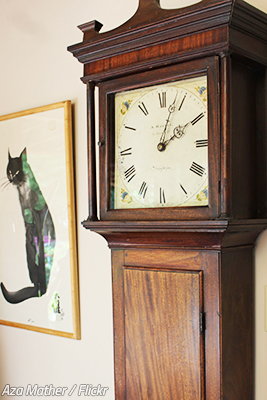
Grandfather clocks aren’t just complex and fine-tuned clockwork apparatus comprised of numerous springs and gears, but they’re also amazing, elegant and precious mechanical parts of artwork, abundant with nice decorations and trendy finishing. Those enormous (six to eight feet in height) long-case, freestanding, weight-driven pendulum clocks are widely valued for their aesthetic attributes and classic price.
Should you have this exquisite timepiece, then the final thing you would ever need would be to leave your long-case clock supporting if you are moving to a different house. Obviously, the actual question here is how to correctly maneuver a grandfather clock without hurting the delicate and heavy timekeeping device – its exterior, glass components, and nice mechanics – in almost any manner.
To package and transfer a grandfather clock without specialist help is a delicate endeavor, a hard DIY task that needs lots of things to go right at precisely the exact same moment. Fortunately, we have got the very best advice about the best way best to proceed a grandfather clock safely.
That is right, we have got the steps about how to PREPARE, DISASSEMBLE, PACK and MOVE a grandfather clock — all of the measures that will function like clockwork.
Here is the way to proceed a grandfather clock at 20 steps.
STEP 1. PREPARE: Inspect your own grandfather clock
Soon enough, you will find out how to prepare a grandfather clock to get transferring — see the measures below. But first, it is crucial that you inspect your pendulum clock carefully and evaluate its existing condition.
The most important reason behind this original grandfather clock review is that any preexisting structural damage in the clock — diminished areas or damaged components — may result in more significant issues throughout the actual relocation procedure.
Inspect your grandfather clock attentively — assess its own wooden case for cracks or other sorts of harm and have a better look at its own glass parts. Additionally, check for lost screws, keys or other fastening components.
Get in touch with a local watch store for help when you don’t have any clue how to do this first evaluation of your long-case clock.
Measure 2. PREPARE: Evaluate the DIY threat
The perfect method to maneuver a grandfather clock would be to seek the services of experienced professionals to get it done for you. But hiring movers will probably cost you cash so that you might opt to transfer your grandfather clock on your own and save a bit of money in the procedure.
Needless to say, before anything else, it is time for you to evaluate carefully the danger of transferring a grandfather clock on your own.
Are you going to be able to collect up at least two additional helpers to supply you with hand?
Have you got a utility dolly to move your large and hefty weight-driven pendulum clock outside of your house and load it securely on a moving car?
Do what is best for your precious floor clock.
The largest dangers of a self-move
Measure 3. PREPARE: Disassemble your clock to keep it secure
You’ll have to disassemble your own grandfather clock to transfer it securely to some other place.
The most significant thing you will have to understand when planning to move a grandfather clock would be that you ought ton’t only lift and take the precious timepiece without needing disassembled it initially.
Somewhat like a piano, a pendulum clock just appears sturdy and type of indestructible while if reality, the two specialization things consist of exceptionally delicate elements that could readily be ruined forever.
Irrespective of the move space, you need to disassemble your own grandfather clock prior to transferring it — otherwise, irreparable harm to its own internal workings is practically guaranteed.
The comprehensive steps below will instruct you how you can disassemble a grandfather clock to get transferring — be certain that you follow them carefully.
And get yourself a pair of cotton gloves prior to the disassembly procedure, for the perspiration and oils from the hands can stain the glass and brass components of this long-case clock.
Measure 4. DISASSEMBLE: Safeguard the wires of cable-driven pendulum clocks
As you already know, the most effective way to maneuver a grandfather clock would be to disassemble it first. Along with the very initial disassembly step would be to guard its wires or chains (based on the design ) so that they don’t become tangled or twisted upward throughout the transfer.
Here is the Way to protect the wires of a cable-driven grandfather clock:
Open the front glass panel and block the clock pendulum from swinging.
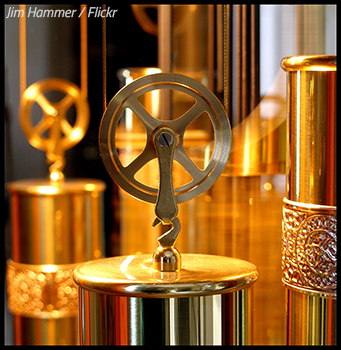
Insert a few folded bits of packaging paper over every pulley holding the wires.
Wind up the weights all of the way to the surface, one at a time, before the newspaper bits become pressed against every pulley.
This security measure ensures that the wires will stay tight when the weights are eliminated in Step 6.
Measure 5. DISASSEMBLE: Safeguard the chains of chain-driven pendulum clocks
Should you possess a chain-driven grandfather clock, then you will have to be certain its chains don’t get broken or damaged throughout the home move.
Here is the Way to protect the chains of a chain-driven grandfather clock:
Use your hands to stop the pendulum from swinging.
Wind the weights up halfway, about three-quarters of the whole length. DO NOT pull on the weights all of the way up since that may harm the chains and their sprockets.
Insert cable ties only under the sprocket of every pair of chains, then resolve those ties set up.
This measure will ensure that the clock chains will not drop off their sprockets throughout transportation.
Moving to a Different country: Checklist and Tips
Measure 6. DISASSEMBLE: Eliminate the weights
The practice of preparing a grandfather clock to get transferring follows several successive steps that, consequently, follow their strong inner logic. So, now that you have procured the pendulum clock wires or chains, it is time to eliminate the weights so that you can package them individually.
Employing soft cotton gloves (or some piece of soft fabric ), softly unhook every clock weight and watch on its underside whether it has been pre-labeled.
When it’s marked, then that is fine — you will just have to package it correctly (see Step 15). When it is not marked, then you are likely to need to tag each weight correspondingly (see another step) so that you don’t make any errors when minding these weights at the new residence.
Measure 7. DISASSEMBLE: Tag the weights
The weights of a grandfather clock aren’t interchangeable.
Sometimes it’s the tiny things that will let you proceed a grandfather clock at the finest way possible.
Most grandfather clocks have 3 weights and to make matters more complex than you would enjoy, these weights aren’t interchangeable because every one weighs otherwise.
Thus, it’s extremely important that you know where every clock fat belongs: Left, Center or Right.
In the event the weights aren’t marked in any way if you take down them, tag them by attaching little labels to their own bottoms. You can use L for Left, C for Center and R for Right.
To get a fool-proof reference point, always tag the weights even though you’re confronting your grandfather clock.
The best way to label boxes for transferring
Measure 8. DISASSEMBLE: Safe the dangling chains
If you are moving a chain-driven grandfather clock, then you will have to secure its chains as soon as you’ve eliminated the weights. You should not leave them just like this, hanging freely within the body of your pendulum clock only as they can lead to considerable harm to the inner clock parts.
Wrap the chains together in soft packaging paper to produce 3 different segments along their whole length — shirt, centre, bottom. Then use tape to fasten those miniature paper packs collectively and consequently prevent any free motion of the metallic chains within the clock.
Measure 9. DISASSEMBLE: Eliminate the pendulum
Now comes one of the most vital measures when moving and packaging a grandfather clock — the secure removal of this pendulum itself.
Eliminate the side panel to obtain access to this clock pendulum and its own manual, then keep it secure until it is time to re install it.
Use one hand to hit within the area in which the side panel has been a minute ago and get a grasp of this pendulum guide.
Use the other hand to make it to the clock pendulum from the front section.
Lift up the pendulum, softly and gradually, until it unhooks out of its directing mechanism. Don’t use more pressure than it is needed.
Leave the pendulum you simply unhooked at a secure spot to package this up later.
The best way to Get Ready for a long-distance movement
Measure 10. DISASSEMBLE: Safe the pendulum guide
The appropriate method to transfer a grandfather clock isn’t too complex so long as you listen to such disassembling, moving and packaging measures.
As soon as you’ve unhooked the clock pendulum, it is time to affix the routine guide. In fact, any abrupt motions or shocks can damage that delicate manual so it must remain trapped during transportation.
Wrap the manual with several sheets of gentle packaging paper, then keep those sheets set up by taping them or placing rubber bands over them. That will limit the general motion of the pendulum manual and will help keep it secure throughout the home movement.
Measure 11. DISASSEMBLE: Safeguard the chime rods
Do everything that you can to safeguard each and every part of your grandfather clock.
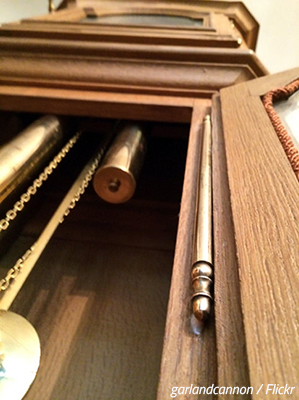
Some grandfather clock versions arrive with chime sticks and in case your long-case clock does also, then you will also must guard those sticks during the haul.
The thing to keep in mind here is that chime sticks are pretty brittle and might break if they’re left with no kind of protection. The worst part is that many chime rods are incredibly tough to replace so no matter what you do, do not skip this step.
To guard the chime rods when going, place small parts of bubble wrap between the sticks, then use tape to repair the protective cloth. In this manner, the metallic rods can’t get in contact with each other and will not get accidentally ruined.
Measure 12. DISASSEMBLE: Eliminate glass shelves and wooden decorations
To transfer a toddler clock safely, you’ll need to eliminate any glass shelves it might have. Try this very carefully since you do not wish to lose any of those glass parts of your pendulum clock, and you also do not wish to cut yourself on the glass either.
Additionally, take off any ornamental wooden decorations which 1) may be removed safely( and 2) seem too brittle to endure the move unscathed. Pack both glass components and wood decorations in packaging paper first, then in protective (moving) blankets.
At length, reinstall the side entry panel of your own grandfather clock and then lock it in place. That entry panel (or panels) must be there so that the glass windows of this long-case clock will not come out.
Measure 13. PACK: Bundle the pendulum and the weights
You will be happy to learn that packaging a grandfather clock for transferring is much easier than disassembling it, hence the upcoming few packing measures is going to probably be the calm before the storm. The storm, naturally, is the true job of loading and carrying the huge weight-driven pendulum clock on the moving truck.
Pack the pendulum and weights in packaging paper first, then wrap them together with heavy shifting blankets. Don’t forget to pack every weight separately so that they will not have the ability to touch and possibly get damaged during the transfer.
Use packing tape to secure the bundles. Transfer them in a solid cardboard box of the ideal dimensions.
Measure 14. PACK: Safeguard the frontal glass segments
This measure is all about ensuring that the glass segments in the front of the freestanding clock will be well-protected against breakage.
Cut out cardboard bits that fit the form and measurements of every distinct glass segment, then set the cardboard over those readily breakable regions of the floor clock. Use painter’s tape (masking tape) to fasten these cardboard cut-outs without leaving nasty adhesive marks on the glass surface.
Always go for cardboard together with maximum depth. Should you’re feeling that the glass panels continue to be vulnerable, then don’t hesitate to bring an excess bubble wrap coating over the cardboard one. The bubble wrap will function as a superb shock absorber during transportation.
The best way to package delicate items for transferring
Measure 15. PACK: Wrap the whole body of this clock
Most grandfather clocks are too precious to be left unattended during a movement.
As stated previously, packaging a grandfather clock for transferring is pretty logical and straightforward. Thus, do it efficiently before proceeding onto the last barrier — wheeling the massive clock from the house and loading it on the moving van.
The concluding phase of this packing task would be to wrap the whole body of the huge clock in moving blankets. Do not leave any sections unprotected and utilize as many blankets as you want to supply a fantastic degree of security to your precious possession.
Use packing tape to fasten the blankets but take care to not touch the clock surface directly with the tape as doing this will most likely harm the delicate end.
Measure 16. MOVE: Get friends to help out you
Now that you understand how to package a grandfather clock to get a move, let us proceed to the last phase of this clock moving procedure — the past couple actions that will allow you to take the major clock outside of your house and load it securely on the moving automobile.
You shouldn’t ever try to transfer your grandfather clock completely in your own — it is too risky because of the oversize dimensions and severe weight of the household thing. In fact, one wrong move may harm that precious thing forever, and let us face it — many grandfather clocks are, to put it simply, priceless.
Thus, to raise the odds of a trouble-free transfer of your long-case clock, don’t initiate the transferring task unless you have got a few helpers on your side.
The way to get friends That Will Help You move
Measure 17. MOVE: Load the grandfather clock on a dolly
The next step is to load your own grandfather clock on a utility dolly — the two-wheeler that’s used for moving tall and heavy household things like refrigerators, washing machines, dishwashers, stoves, and also a few kinds of furniture too.
Rent a utility dolly out of a local moving company or a truck rental service, or buy one in the nearest home improvement store.
Have the 2 helpers tilt the grandfather clock slightly backward and you slip the moving dolly beneath the bottom of the clock. Use the dolly straps to fasten the hefty load onto it – utilize parts of rope or another pair of straps in the event the dolly came with no straps.
Then, together with your friends’ aid, tip closely the dolly backward till it is well-balanced on both rubber wheels.
Measure 18. MOVE: Maintain your grandfather clock vertical
Exercise extreme caution as you’re wheeling your own grandfather clock outside of your house. Make sure you go slowly and never to rush items, even if time is against you personally.
You have to do your very best to maintain your grandfather clock vertical in any way times. Setting down the clock during transportation isn’t recommended as it might hurt the finely-tuned clockwork mechanism within it.
Antique furniture clocks are much more prone to transport damage when they’re laid back on their hands or in their back due to the way their moves are fixed into the instance.
Things to perform on Moving day: Transferring day checklist
Measure 19. MOVE: Load the long-case clock on the truck
The instant that you’ve managed to wheel your prized possession out of your house is precisely the moment you ought to begin considering how to load your own grandfather clock in the moving truck.
Wheel the utility up dolly across the loading ramp to get it within the rear of the moving van. The loading task should not be too hard as long as your helpers are there, pushing and supporting the load because you are pulling this up.
Again, do not rush up the loading procedure, and undoubtedly, do not underestimate its difficulty level either.
Once safely inside the moving vehicle, strap nicely the grandfather clock to both sides to limit any unwanted movement throughout the move excursion.
The best way to load a moving truck the Ideal way
Measure 20. MOVE: Install and re-assemble the clock at the new house
prepared to load your own grandfather clock in the moving truck?
Hopefully, you will already know where you would like to place the majestic pendulum clock at the new residence.
Finish the re-assembly job by following these really steps in reverse sequence. Then wind the clock up, place the suitable time and only start it with its own predecessors.
Our measures and ideas for transferring a grandfather clock finish with a single bit of advice: do not transfer your own grandfather clock by yourself once you evaluate that the dangers of harm to you’re too large.
As a guideline, if you have never transferred a weight-driven pendulum clock before, then it is a fantastic idea to hire professional movers that understand what is necessary to ensure the security of your precious product.
Just how much does it cost to move a grandfather clock?