HomeMoving BlogThe Many Practical Uses of Plastic Wrap for Moving
The Many Practical Uses of Plastic Wrap for Moving
Tuesday, August 4, 2020
When packing for a transfer – a project of Herculean proportions and many disadvantages – you will want to make the most of every possible method to accelerate and simplify the procedure. And really, there do exist several smart packaging hacks which could enable you to finish the job in a quicker and more effective fashion – you simply should understand them.
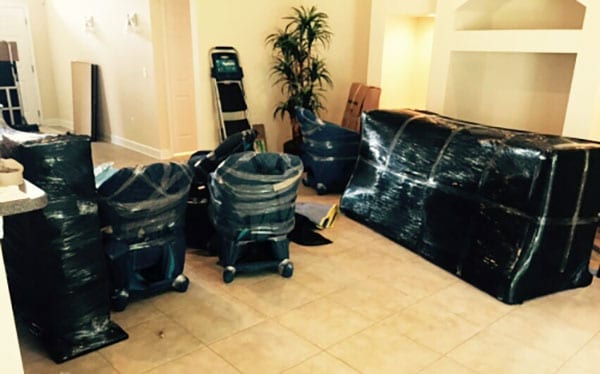
Entirely prepared for the trip for your new residence.
1 such completely simple yet overwhelmingly valuable trick is to use plastic wrap for packaging. The cling film can safeguard your furniture, maintain loose items bundled together, stop fluids from slipping, and even more – it will be able to help you solve many different shifting issues and prevent numerous relocation dangers. As a matter of fact, vinyl wrap packaging is among the very best techniques to keep your possessions safe through a house move – it’s also silent easy and productive.
This is how you can use plastic wrap for transferring to make your move easier, safer, and more smoother.
Why would you wish to make use of stretch wrap for transferring?
Vinyl wrap – also generally Known as stretch wrap or shrink wrap – is among the most essential packing materials to have at hand when planning your items for transferring.
Decorative stretch wrapping isexceptionally versatile – it may protect furniture from scratches and scuffs, keep dirt and dust away from the possessions, package items together, protected loose cords and cables, maintain protective wrappings in place, avoid clogs, etc..
Regardless of how thin it is, stretch wrapping (and notably professional-grade moving wrapping ) is very powerful and tear-resistant, therefore it could withstand a great deal of tension and retain your things (even big and heavy ones) shielded during the whole moving process.
Packing vinyl wrap issafe to the items and simple to use– it adheres to itself, but maybe not to surfaces (as, unlike packaging tape, it doesn’t have any adhesive backing), therefore it won’t leave a sticky residue or cause any additional damage to the delicate surface of your furniture and other household things. Owing to the clingy temperament, stretch wrap may be somewhat tricky to use, but it is quite simple to use and quite simple to eliminate.
Plastic wrapping is cheap and available in numerous sizes, so that you may easily locate the most suitable kind of cling wrap to your packaging requirements and get as much of it as crucial.
Packing wrapping is recyclable, which means you don’t need to be worried about the ecological effect of your own move.
See also:Packing stuff for transferring you can not do without
The way to use plastic wrapping for transferring
Efficient and flexible, packaging shrink wrap can be extremely Helpful for a number of purposes:
1) Secure wrappings and protective stuff around a product
To maintain your appliances, furniture, along with other bigger household things safe and undamaged throughout your movement, you have to wrap them in bubble wrap, moving blankets, or other appropriate protective coverings. These protective substances, though, will be of no use should they fall off through transport – you will need to protect them in place.
Safe and protected.
You can certainly do this with the support of packaging ropes, tape, or straps, but furniture saran wrap provides a much safer, easier, and more effective method to maintain the wrappings set up. It won’t just protect the bubble wrap, newspaper padding, furniture pads, and other protective substances around your own items, but may also give another layer of protection from dust, dirt, and moisture.
Exactly the same applies to each of awkwardly-shaped items which can not be packaged into a box (and even to little delicate items which may be boxed up) – shrink wrap will fasten their protective cushioning and will add extra protection against dust and moisture.
2) Protect from dust, dirt, and moisture
When wrapped around a product, cling film creates a protective coating around it, preventing dirt and dust from getting into a possessions (and, consequently, preventing stains and soiling) and retaining moisture off (especially significant if it rains on moving day, but also helpful if something spills during transit, when the surfaces where your things are put are moist (or contaminated with mould ), etc.).
Be mindful though – if moisture becomes trapped under the plastic substance, it could lead to mold growth on the wrapped item. You want to be certain that your possessions are totally dry (also there’s not any probability of condensation or some other method for moisture to receive – or to form – beneath the cling film) when packaging with plastic wrap.
3) Maintain furniture drawers and doors shut
Taking furniture from a house and loading it onto a moving truck (also as unloading it and carrying it in the new house ) entails plenty of turning and tipping – and when the furniture includes doors or sliding drawers, then they could open throughout the procedure (drawers may even fall out). This might cause substantial harm to the furniture and also pose dangers to the people carrying the bits (and of course that the contents of this furniture – if any – will melt ).
To prevent this, you want to secure drawers and doors when packaging your furniture for transferring – which is readily achieved with a couple layers of plastic wrap. The stretch film is going to continue to keep the drawers and doors closed during the transfer, which makes the furniture bits safer and simpler to deal with.
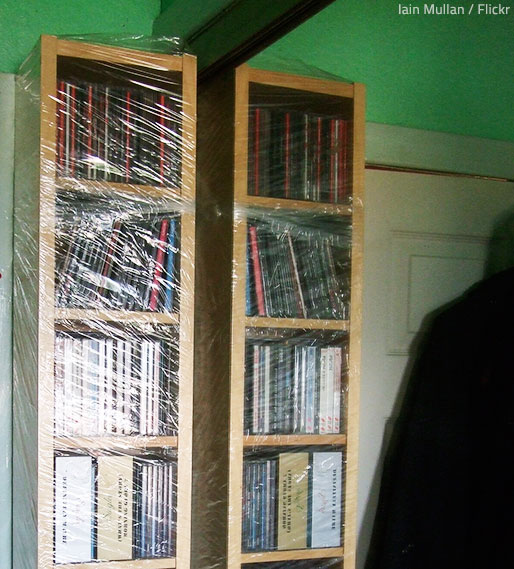
Today your DVD set will remain safe and sound throughout the transfer.
Great to know: Shrink wrap may be utilized to secure lids in substantially the exact same manner it may be utilized to fasten furniture doors – in the event that you wrap a plastic bin (or some other moving container with a lid) in packaging wrap, there will not be some probability of this lid falling out through transit. It might even be a fantastic concept to shrink wrap cardboard boxes containing small things, which means that you won’t need to fret about the cartons breaking open throughout the transfer and your possessions spilling out.
4) Maintain the contents of a drawer contained inside it
It is possible to accelerate the packing procedure (and save on packing materials, and conserve space at the moving automobile ) by leaving things in drawers – rather than draining your kitchen cupboard drawers, desk drawers, dresser drawers, etc., and packaging their contents in transferring boxes, you can leave your things as they are and proceed the drawers complete. All you have to do is wrap a couple layers of packaging saran wrap round the drawer to keep your possessions safely contained inside it.
Remember though that departing the drawers complete is insecure (because of the excess burden along with the shifting of these items within the drawers) and can cause harm to your furniture, your own house, or your own items, or perhaps to private harm. You Should Think about this option only when:
The drawers are hardy and well-built;
The things in the drawers are non-fragile and lightweight (like bedding, clothes, office materials, silverware, etc.);
The complete drawers aren’t too heavy;
You are moving short-distance.
5) Avoid spills
Along with preventing things from spilling out during the transfer (by procuring boxes, lids, furniture doors, and drawers), vinyl stretch wrap may also prevent fluids from spilling – by flow proofing their own containers.
Simply get rid of the caps out of the bottles that are open, tubes, jars, etc., put a sheet of plastic wrap across the openings, fasten with a rubber ring, and twist the caps forth. The containers will be wholly leak-proof and there’ll be no probability of your bathroom goods, kitchen components, along with other liquid goods spilling through transport and staining or drenching additional products.
Connected:The best way to package toilet items for transferring
6) Bundle like things together
Packing vinyl wrap can help you arrange your things and keep them together through a move. You can use it to:
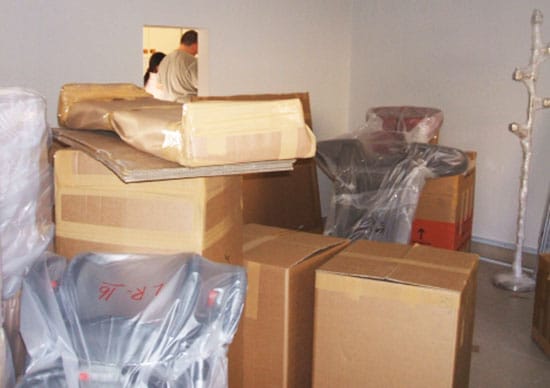
Shrink wrap can help you package all sorts of awkward things for transferring.
Keep smaller moving boxes piled together;
maintain furniture components collectively;
stack little items (for example, silverware, office stuff, etc.) and fasten them together;
package up mattress rails, curtain rods, mops, and other extended embarrassing things;
package hanging clothing (vinyl wrap may accommodate almost any length and volume of clothes — simply wrap it on a bunch of hanging clothing to keep them together and protect them from dust and grime ).
7) Safe power cords and cables
Cables, cords, and cables will need to be well fastened over the course of a movement, so that they do not get ruined in the process, do not lead to harm to the apparatus they belong to, and do not pose tripping hazards on moving day.
It is possible to readily secure appliance wires and wires into the machine, power cords and cables to the electrical device (or electronics ), etc. with stretch wrap. You might even fasten detached cords (correctly arranged and folded in loops) using all the clingy material. (See also: The way to package electronics for transferring ; The way to package kitchen appliances for transferring )
Great to know: Stretch wrap may also keep mats, rugs, and other similar things closely rolled and secured throughout the whole moving process.
Now that you are conscious of the numerous applications of plastic wrapping for transferring – both surprising and conventional – you will have the ability to prepare your items for dispatch in a faster, easier, and more efficient manner. To take whole advantage of this viability of cling film, but you will need to understand how to vinyl wrap your things – along with your furniture, specifically – the ideal way.
The best way to use plastic wrap for moving furniture
Shrink wrap is beneficial in several facets of the packaging procedure, but it’s most beneficial when it comes to packaging and moving furniture things. This is how to vinyl wrap furniture for transferring:
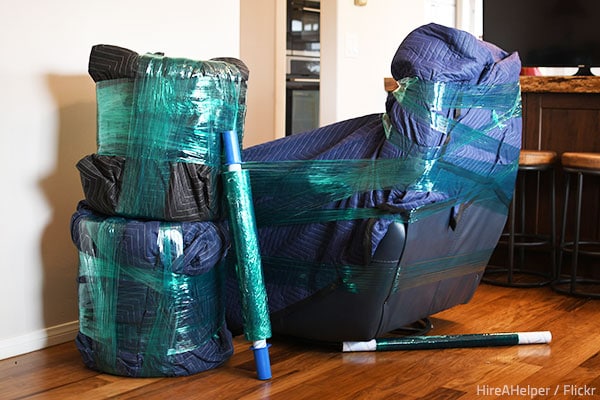
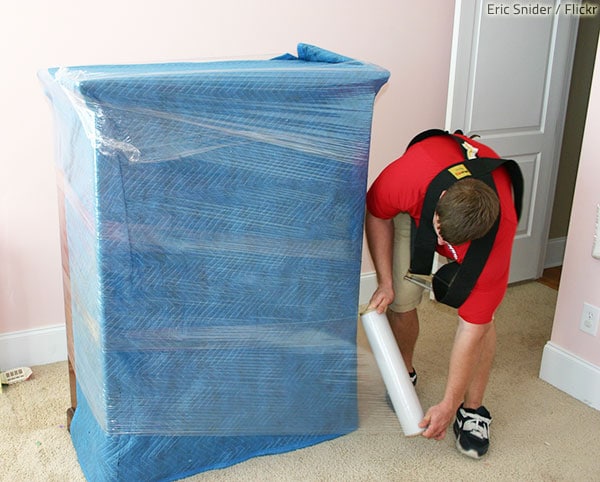
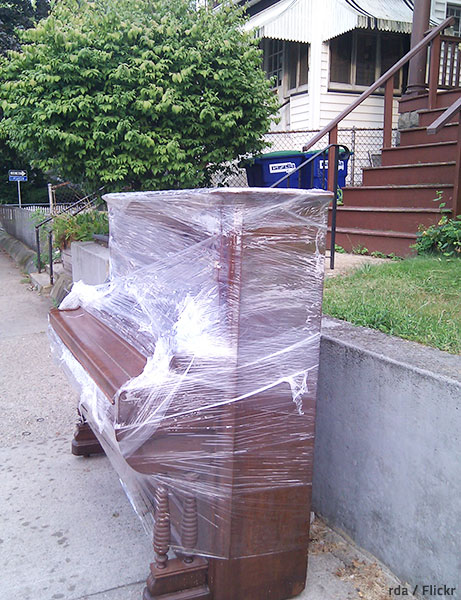
For improved security, cover the whole piece in plastic wrap.
Scrub your upholstery, clean it well, and be certain it’s totally dry before packaging it for transferring (trapping dirt, debris, or moisture beneath the protective wrap can cause stains or other harm to your bits );
Eliminate any removable components, like furniture legs, glass doors, shelves, etc., and package them separately. Disassemble larger furniture pieces, as essential;
Cover furniture corners and protruding furniture components with bubble wrap (or polyurethane padding), then wrap across the protective sheeting with stretch wrapping. This can protect the corners from chipping and will keep them from causing harm to the walls and some other things they are in contact with;
Wrap wood furniture and leather upholstery with newspaper padding and/or moving blankets, and then use plastic wrap to ensure the protective sheeting in place. The padding will protect the fragile furniture surfaces from scratches, nicks, dents and other damage and will allow for sufficient air flow so that no condensation forms on the bits. Ensure that you never use shrink wrap right on leather or wooden upholstery, as moisture can get trapped beneath the vinyl material and destroy the delicate polished finish of wooden bits, cause the leather or the wood to warp, or cause mould growth;
Wrap cloth furniture (sofas, armchairs, dining room chairs, etc.) with plastic wrap to protect it from dust, dirt, stains, and moisture. You may safely use plastic wrap right on cloth upholstery since there’s not any probability of condensation occurring on the cloth surface.
You are likely to want big vinyl wrap (15″ or longer ) so it is easy to pay for the whole furniture thing.
To wrap a sizable part, you will need to hold the roster (put your fingers in the hollow roster ) as you walk round the furniture – the plastic picture will unwrap as you move:
Have someone hold the packaging wrap contrary to the furniture throughout the first walk round, therefore it will not fall down. Following the initial round, the cling film will adhere to itself and remain in place;
Start in the bottom and end the saran wrap horizontally around the furniture thing;
Wrap closely and make numerous layers for greater security;
once the piece is totally coated, cut the shrink wrap with scissors.
Must-read: The best way to package furniture for transferring
The best way to vinyl wrap delicate things
Never use plastic wrap right on surfaces that are delicate!
As previously mentioned, packaging shrink wrap works good not just for furniture, except for almost any delicate, hard-to-pack things too. You may use it to offer you an excess layer of security for your breakables, valuables, irregularly shaped things, pieces of artwork, etc.. Just be sure that you wrap the delicate things in packing paper, bubble wrap, foam sheets, or other decent cushioning and padding materials first – you shouldn’t ever use plastic picture directly to art or some other delicate surfaces. After the product is securely wrapped, use stretch wrap to ensure the protective sheeting and create a barrier against dust, dirt, and moisture (wrap both horizontally and vertically for optimum security ).
For bigger items, you ought to hold the roster and move it round the thing (as explained previously );
For smaller objects, simply use the strain control manage to wrap the cling film around the item.
See also:The way to package delicate items for transferring
The way to Have plastic wrap for transferring
Shrink wrapping for moving is not difficult to come by – it is affordable and easily available. You will find, however, a Couple of important things to consider when Searching for the plastic substance:
What type of plastic wrap to buy for the relocation?
Plastic wrap is fabricated in two distinct manners (throw or dismissed ), comes in a variety of sizes and indicators, may be clear or coloured, and might or might not have a deal. What Type of moving wrap will work best for you depends upon Your Particular requirements:
Little or big plastic wrap for transferring – Stretch wrap can be found at 5-inch, 10-inch, 15-inch, 18-inch, 20-inch, and 22-inch widths. The rolls are generally 1000-foot or even 1500-foot long. For furniture and other milder items, you are likely to want big vinyl wrap (in most cases, 20″ will work best). The 10″ roster is excellent for packaging smaller things;
65 Quantify or 80 Measure — A greater number judge means greater security, therefore the 80 judge wrapping is the better choice when packaging for a home move;
Blown or pre-stretched (throw ) – Pre-stretched wrapping is lightweight, has powerful cling on either side, and does not require an excessive amount of pull when wrap larger items. Blown extend film, on the other hand, is stronger and will handle heavier loads;
Clear or coloured (usually green) – Colored stretch wrap may stain furniture and cloth – especially if you are moving through the summer, since the plastic stuff could melt when subjected to elevated temperatures – so you are suggested to acquire clear plastic wrap to your transfer;
Manage or no manage – Handles make it simpler to use the wrapping, but the layout restricts the diameter of the wrapping – so managed stretch wrapping is only practical for smaller objects. Non-handled big rolls (18″ or 20″ wide) are a lot more appropriate for wrap furniture bits, household appliances, and other bulky items.
Just how much plastic wrap do you really will need for transferring?
You can obviously see the effective end of your relocation project, can’t one?
If you are moving a 1-bedroom flat or a 2-bedroom residence, 1 roster of 15″ x 1500′ (or 20″ x 1000′) plus a single roll of 5″ x 1000′ (or 10″ x 1000′) ought to be sufficient for your packing requirements. In case you have a lot of furniture and other household products, however, it could be better to have two bits of large plastic wrap for transferring – to be on the secure side.
For bigger motions, you are likely to want around three bits of 20″ x 1500′ and 2 rolls of 5″ x 1000′.
Connected:Just how many boxes do you require transferring
Where to purchase plastic wrap for transferring?
You may locate furniture wrap for moving at virtually all significant retailers, in addition to at local moving companies and truck rental firms. Obviously, you may also buy plastic picture on the web.
Obviously, should you hire specialist packers (or even full service movers) to your move, the specialists will bring the essential stretch wrapping (and other packaging materials) and will understand how to plastic wrap your things in order that they remain safe and sound throughout the transfer.
Whatever the case, vinyl wrap packaging is an effortless means to guarantee the protection of your possessions – and guarantee your peace of mind – when moving home. Ensure that you benefit from the cheap, highly sensible packaging material to your next movement.